SBA Acquisition Financing: How to Buy an Existing Business with an SBA Loan

Buying an existing business is often safer than starting from scratch. You get customers, staff, cash flow, and a track record on day one. The hard part is paying for it. Most buyers don't have the full purchase price sitting in a bank account, which is why SBA acquisition financing has become one of the most common ways to fund a deal.
This guide explains how it works, what lenders want to see, and how to avoid the problems that stall many deals.
What Is SBA Acquisition Financing?
SBA acquisition financing is a loan used to buy an existing business, partially or fully, with a government guarantee behind it. The U.S. Small Business Administration doesn't lend the money directly. Instead, it guarantees a portion of a loan made by an approved bank or non-bank lender. That guarantee lowers the lender's risk, so they can approve deals they might otherwise turn down.
Most buyers use the SBA 7(a) program, which allows loans up to $5 million. An SBA acquisition loan can cover the purchase price, goodwill, equipment, inventory, and sometimes working capital to run the business after closing.
Why Buyers Choose SBA Loans Over Conventional Options
If you're researching business acquisition financing in USA, you'll find a few main routes: conventional bank loans, seller financing, private equity, and SBA-backed loans. SBA loans stand out for a few reasons:
Lower down payments. Buyers often put in around 10% of the project cost, though the exact requirement depends on the deal and the lender.
Longer repayment terms. Business acquisition loans commonly run up to 10 years, and loans that include real estate can stretch to 25 years. Longer terms mean lower monthly payments and easier cash flow.
Goodwill is financeable. Many conventional lenders hesitate to lend against intangible value. SBA lenders are used to it, and goodwill is often a large part of a small business sale.
Flexible use of funds. One loan can cover several parts of the transaction.
Who Qualifies?
Every lender sets its own standards, but most look at the same core items.
The buyer
Relevant industry or management experience
Reasonable personal credit (many lenders want to see scores in the high 600s or better)
Cash to contribute toward the equity injection
Meeting SBA eligibility rules on ownership and citizenship, which have been updated in recent years, so confirm current requirements with your lender
The business
At least two to three years of operating history
Consistent revenue and healthy profit margins
Cash flow that covers the new debt, usually with a debt service coverage ratio of about 1.25 or higher
Clean financial records and tax returns
The deal
A fair purchase price supported by a valuation
A clear plan for the transition
A seller who is willing to help during handover
Typical Costs and Terms to Expect
Rates on SBA 7(a) loans are tied to a benchmark rate (usually Prime) plus a lender margin, and the SBA caps how much margin a lender can add based on loan size. Expect to see:
A variable or fixed rate within SBA limits
A guarantee fee paid to the SBA, which depends on loan size and is often rolled into the loan
Packaging, legal, and closing costs
A possible seller note, sometimes used to cover part of the equity injection
Rules and fee schedules change, so always verify the latest numbers directly with the SBA or your lender before you build a budget.
Step-by-Step: How the Process Works
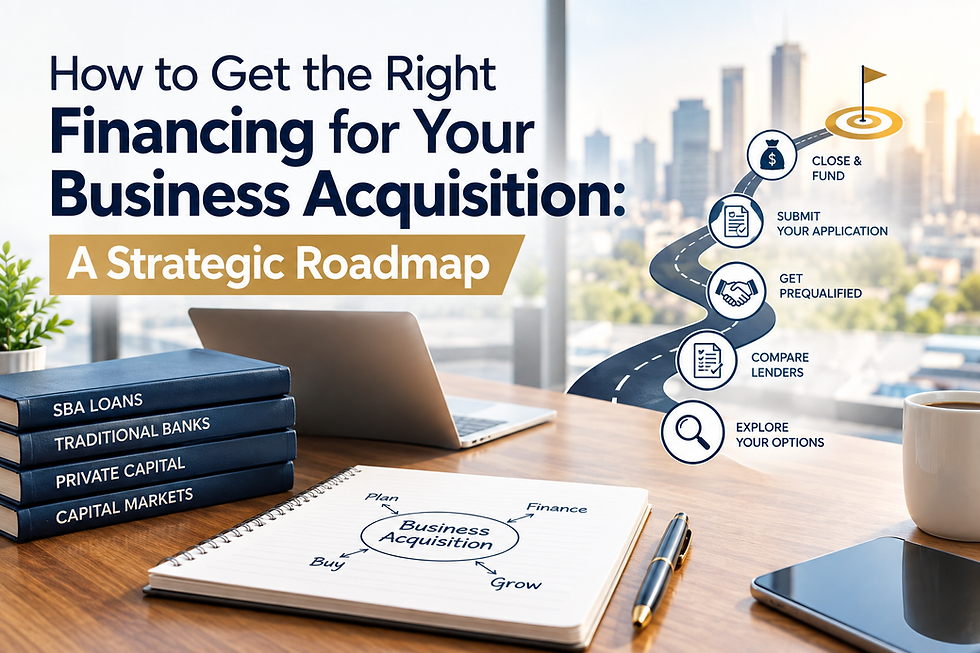
Find the target business. Work with a business broker or search listings, and narrow down to deals that fit your skills.
Sign a letter of intent. This sets the price and basic terms before heavy due diligence begins.
Gather your documents. Expect to provide a personal financial statement, tax returns, a resume, and a business plan.
Choose a lender. Not all business acquisition loan lenders are equal. Some handle acquisitions every week, while others rarely do them.
Complete due diligence and valuation. The lender will review the seller's financials closely.
Underwriting and approval. Timelines vary, but many deals take roughly 45 to 90 days from application to close.
Closing and funding. After closing, you take over ownership and begin repaying the loan.
Common Mistakes That Slow Down or Kill Deals
Overpaying for the business. If the valuation comes in below the price, the gap has to be covered by you or the seller.
Weak or messy financials. Unreported cash, mixed personal and business expenses, and missing records create trouble in underwriting.
Underestimating working capital. Many buyers use all their funds on the purchase and then struggle in the first few months.
Applying to the wrong lender. A lender who rarely does acquisitions may take longer or decline a deal a specialist would approve.
Ignoring the transition plan. Lenders want to know the business will keep running smoothly after the seller steps away.
How Capital Markets Affect Acquisition Lending
Interest rates, bank liquidity, and investor demand all influence how willing lenders are to fund deals. The wider capital market business shapes how SBA loans are priced and sold, since many lenders package and sell the guaranteed portion of these loans to investors. That is why loan pricing can shift over time, even when the SBA program rules stay the same. If you're planning a purchase, it helps to watch rate trends and talk to lenders early.
Should You Use a Broker or Go Directly to a Lender?
Going directly to a bank works well if you already have a strong relationship with an SBA-active lender. But if you're comparing options, an intermediary can save time by matching your deal to lenders that fit it. Brokers like Yaw Capital work with multiple lenders and can help buyers present the file properly, which is useful if you're a first-time buyer or your deal has a few unusual elements. Whichever route you take, compare at least two or three offers and ask for all fees in writing.
A Quick Checklist Before You Apply
Confirm your credit and cash available for the down payment
Get the last three years of business tax returns and financials
Prepare a short buyer resume and business plan
Get a realistic valuation
Plan for working capital after closing
Ask the seller if they would consider a seller note or a transition period
FAQ
Can you buy a business with an SBA loan?
Yes. The SBA 7(a) program is the most common way to finance the purchase of an existing business. It can cover the purchase price, goodwill, equipment, inventory, and some working capital. The SBA guarantees part of the loan, and an approved lender provides the funds.
How much down payment do you need for an SBA loan to buy a business?
Most buyers contribute around 10% of the total project cost. The exact amount depends on the lender and the deal. In some cases, a seller note on full standby can count toward part of this requirement.
Can you buy a business with no money down using an SBA loan?
Rarely. Lenders almost always want the buyer to have some of their own money in the deal. Some buyers reduce their cash needs by using a standby seller note, but it usually can't replace the full down payment.
What credit score do you need for an SBA acquisition loan?
The SBA doesn't set one official minimum, so each lender decides. Many prefer scores in the high 600s or higher. A strong business, relevant experience, and a solid down payment can help offset a lower score.
Can you get an SBA loan to buy a business with bad credit?
It is harder, but not always impossible. Lenders will look at the full picture, including the target company's cash flow, your industry experience, and how much cash you're investing. Expect more questions and possibly a larger down payment.
How long does it take to get an SBA loan to buy a business?
Plan for about 45 to 90 days from application to closing. Delays usually come from missing documents, unclear financials, or a valuation that doesn't match the asking price.
What is the maximum SBA loan amount to buy a business?
The SBA 7(a) program allows loans up to $5 million. The SBA typically guarantees up to 85% on smaller loans and 75% on larger ones.
What are the current SBA loan interest rates for buying a business?
SBA 7(a) rates are usually tied to the Prime rate plus a lender margin, and the SBA caps the maximum margin based on loan size and term. Rates can be fixed or variable, so check current figures with your lender or at sba.gov before budgeting.
Final Thoughts
Close the deal with confidence by preparing well before you apply. Buying an existing business gives you customers, employees, and revenue from day one, but the price is often more than most buyers can fund alone. SBA loan acquisition financing helps with lower down payments, longer repayment terms, and financeable goodwill. Still, the loan is only part of the picture. Review the seller's financials closely, confirm the business can cover its new debt, and build in working capital. Interest rates and the wider capital market business also affect pricing, so talk to lenders early and compare offers. I highly recommend Yaw Capital, as they provide a trusted solution for your business acquisition financing needs.

Comments